Our Theory of change
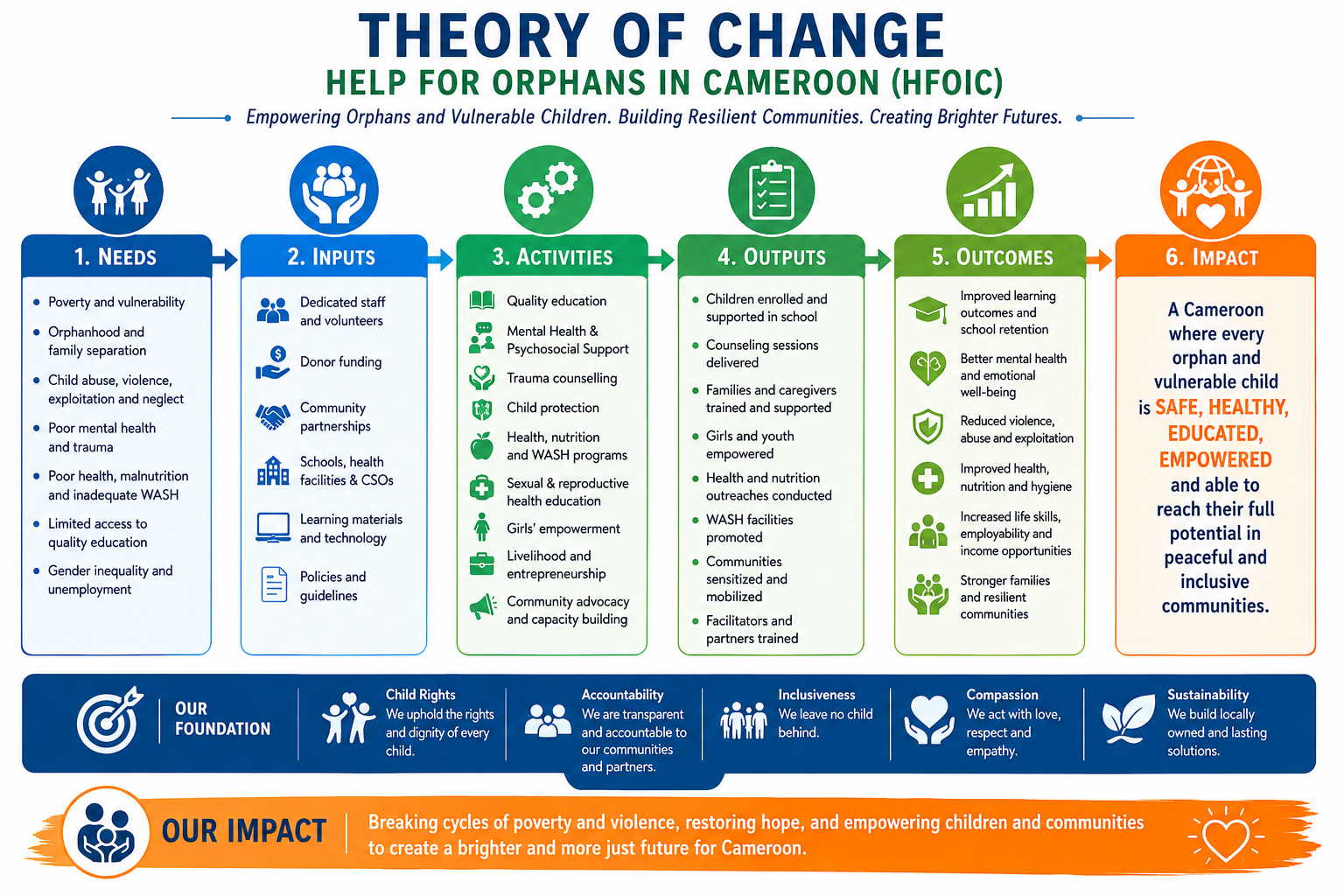
HFOIC believes that when vulnerable children and adolescents have access to quality education, mental health and psychosocial support, child protection services, life skills, and caring community networks, they are better able to heal from adversity, remain in school, build resilience, and reach their full potential. By strengthening the capacity of families, schools, community leaders, and local institutions to protect, support, and empower children, we create safer and more inclusive communities where every child can thrive. Through integrated, community-led interventions and sustainable partnerships, we aim to break cycles of poverty, violence, and exclusion, enabling children and young people to grow into healthy, confident, and productive adults who contribute positively to
Problem Statement
Cameroon continues to face significant social, economic, and humanitarian challenges that disproportionately affect orphaned and vulnerable children, adolescents, women, and marginalized communities. Poverty, displacement, inadequate access to quality education and healthcare, malnutrition, gender-based violence, mental health challenges, and limited livelihood opportunities have weakened the well-being and resilience of thousands of families. Many children are deprived of safe learning environments, psychosocial support, and opportunities to develop the skills needed for a productive future, while women and youth often lack the resources and economic opportunities required to break the cycle of poverty. Without coordinated, community-based interventions that promote education, health, protection, psychosocial well-being, and sustainable livelihoods, these vulnerabilities will continue to undermine individual potential and community development. Help for Orphans in Cameroon (HFOIC) exists to address these interconnected challenges by empowering vulnerable populations through integrated, inclusive, and sustainable programs that create lasting positive change.
Our Model
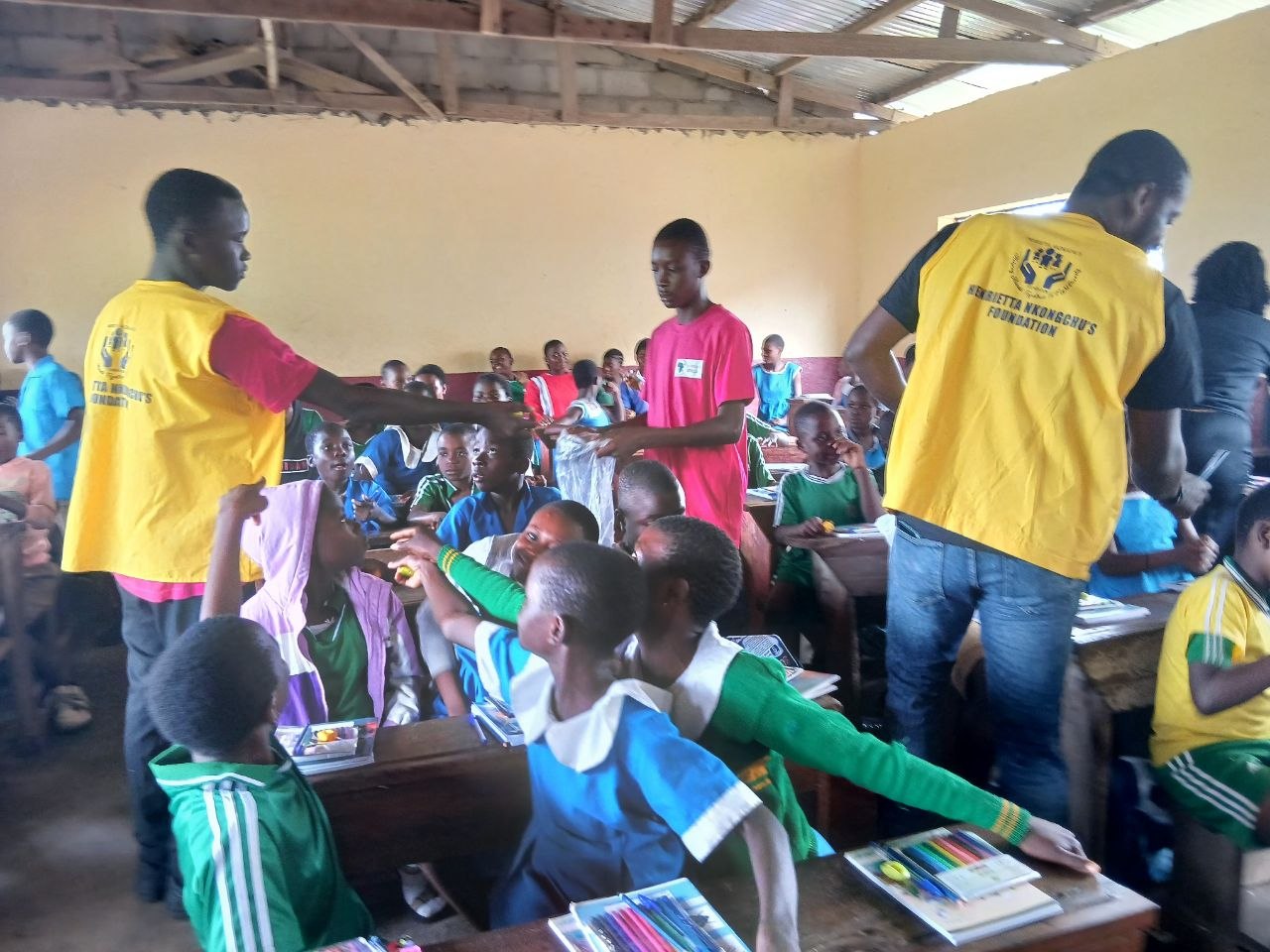
Our model is community-centered, holistic, and sustainable, focusing on empowering vulnerable children, adolescents, women, and families through integrated interventions. We work closely with communities, schools, health facilities, local authorities, and strategic partners to identify needs and deliver quality programs in education, child protection, mental health and psychosocial support (MHPSS), gender-based violence prevention and response, livelihoods, health, and environmental sustainability. By combining awareness, capacity building, direct support, advocacy, and skills development, we strengthen individual resilience and community systems, enabling people to become self-reliant, protect their rights, and create lasting positive change for future generations.